


Prospective Marriage Visa Subclass 300: Complete Guide to Australia 2026

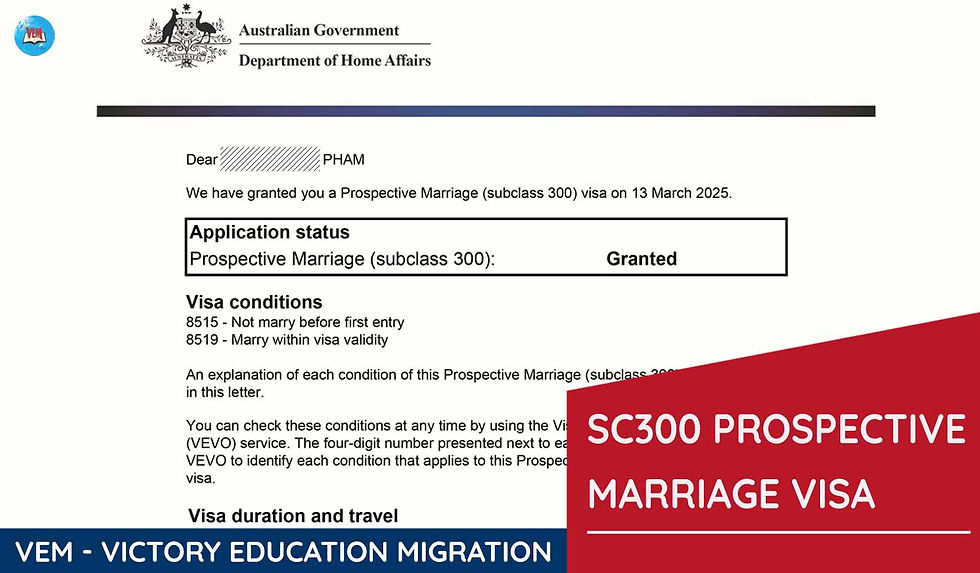
The Prospective Marriage Visa (Subclass 300) stands as Australia's premier temporary visa pathway for couples engaged to marry, offering offshore applicants a 9-to-15-month window to enter Australia, formalise their relationship through marriage, and transition to permanent residency. While requirements remain less stringent than the Partner Subclass 309 visa, Subclass 300 approval presents meaningful challenges that demand careful preparation and comprehensive relationship evidence. This visa represents one of the key pathways for couples planning to build a life together in Australia.
Additional Information: Prospective Marriage Visa Subclass 300
What Is a Prospective Marriage Visa Subclass 300?
The Prospective Marriage Visa (Subclass 300), commonly called the fiancé visa, serves individuals outside Australia who are engaged to marry an Australian citizen, permanent resident, or eligible New Zealand citizen. This temporary visa grants 9 to 15 months from the date of grant, enabling applicants to enter Australia, marry their sponsor, and subsequently apply for an onshore Partner Visa (Subclass 820/801) that leads to permanent residency. Applicants must lodge 300 prospective marriage visa applications from offshore.
Once marriage occurs, couples can transition to the Subclass 820/801 visa pathway, which eventually provides permanent residency in Australia.
Who Can Be the Sponsor for 300 Visa?
Sponsor eligibility for the 300 Prospective Marriage visa requires individuals to be at least 18 years old and meet specific citizenship and commitment criteria.
Sponsor Citizenship Requirements
Sponsors must fulfil these fundamental conditions:
Be an Australian citizen, Australian permanent resident, or eligible New Zealand citizen
Demonstrate genuine intention to marry the visa applicant
Agree to provide support, accommodation, and financial assistance for at least the first two years of the partner's stay in Australia
Sponsorship Restrictions That May Apply
Previous sponsorship history significantly impacts eligibility:
Sponsors cannot have sponsored more than one previous partner or fiancé visa applicant
No sponsorship of a partner or fiancé within the past 5 years unless special circumstances apply
Sponsors cannot have been sponsored for a Partner or Prospective Marriage visa within the last 5 years unless exemptions exist
Additional restrictions apply if holding certain visas (Woman at Risk or Contributory Parent visas) or having relevant criminal history
VEM recommends seeking professional advice to understand eligibility clearly, as limitations can sometimes be waived.
Requirements for a 300 Visa
Meeting 300 visa requirements demands thorough preparation across relationship, health, character, and sponsorship dimensions.
Relationship Requirements
Couples must demonstrate:
Both partners aged 18 or over
Ability to marry under Australian law
Genuine relationship with intention to live together as a married couple
Genuine intention to marry within 9-15 months of visa grant
Physical meeting and personal knowledge of each other
Satisfaction of health and character requirements
No prior visa cancellations or refused visa applications
Sponsorship Obligations
Sponsors must comply with:
Australian citizenship, permanent residency, or eligible New Zealand citizenship status
Maximum one previous partner or fiancé visa sponsorship
No sponsorship within the past 5 years (unless special circumstances apply)
No previous sponsorship as a Partner or Prospective Marriage visa recipient within 5 years (unless exempt)
Police check provision if requested
Disclosure of relevant criminal convictions to the applicant
These criteria form the foundation of all Australian Partner Visa applications, demonstrating genuine intention to marry and build a shared life.
Steps to Apply for a 300 Visa
The Prospective Partner visa (visa 300) application process requires applicants to be outside Australia during submission.
Application Process Overview
Step 1: Prepare documents — Collect identity and character documents (passport, police certificates) plus genuine relationship evidence.
Step 2: Submit application — Complete and lodge visa application online through ImmiAccount with all supporting documents.
Step 3: Sponsor lodgement — After application submission, partners must complete and lodge sponsorship applications through ImmiAccount with relevant evidence.
Step 4: Health checks and biometrics — Attend medical examinations and provide biometric information if requested.
Step 5: Track application — Monitor Department of Home Affairs updates via ImmiAccount regularly.
Step 6: Provide additional documents — Respond promptly to requests for further information to avoid processing delays.
Step 7: Receive 300 visa — Once granted and in Australia, apply for Partner Visa (Subclass 820/801) to continue permanent residency pathway.
Prospective Marriage Visa Checklist
Required documents for Subclass 300 visa applications span seven comprehensive categories.
Identity and Character Documentation
Certified passport and birth certificate copies
Police clearance certificate or equivalent character documents
Relationship Evidence
At least two Form 888 statements from friends or relatives confirming genuine relationship
Evidence of in-person meeting as adults
Proof of ongoing communication: messages, emails, letters, call records
Money transfer or gift evidence
Relationship Statements
Written statements from both partners covering:
How, when, and where the couple met
Relationship development
Shared activities and important milestones
Future plans (marriage, living arrangements, children)
Emotional support and commitment
Marriage Intention Evidence
Authorised marriage celebrant letter confirming wedding date, location
Notice of Intention to Marry lodgement confirmation
Supporting documents: wedding invitations, venue bookings, wedding plans
Dependent Children Documents (if applicable)
Children's birth certificates
Form 1229 if guardian consent required
Sponsor Documentation
Certified sponsor birth certificate copy
Australian citizenship or permanent residency evidence
Previous Marriage Evidence (if applicable)
Legal marriage ending evidence (divorce certificate)
Cost of a Prospective Marriage Visa
The prospective marriage visa subclass 300 cost totals AUD 9,365 for main applicants, with additional fees for family members and administrative charges.
Visa Application Fee Structure
Type of Charge | Fee (AUD) |
Visa applicant | AUD 9,365 |
Additional applicant (18+ years) | AUD 4,685 |
Additional applicant (under 18) | AUD 2,345 |
Health, police, biometrics | Approximately AUD 300 per person |
Fee amounts do not include a 1.4% surcharge. The Australian Government provides no refund for refused applications, and refusal consequences involve significant time, money, and effort costs.
Visa 300 Processing Time
As of May 2026, Subclass 300 processing times range from approximately 15 to 25 months, with many applicants receiving decisions within 11-13 months.
Processing Time Statistics
50% of applications processed within 15 months
90% of applications processed within 25 months
Complex cases may take up to 20-25 months
Successful Prospective Marriage visa (subclass 300) acquisition requires demonstrating genuine marriage intention to Australian citizens, permanent residents, or eligible New Zealand citizens alongside comprehensive relationship evidence, future marriage plans, legal requirement satisfaction, health and character checks, and sponsor financial support confirmation.
What You Can Do With a Prospective Marriage Visa
Subclass 300 visa holders enjoy substantial rights enabling relationship formalisation and Australian life participation.
Visa Holder Benefits
Prospective marriage visa subclass 300 holders can:
Marry partners within the 15-month visa period
Travel to and from Australia frequently while valid
Study and work in Australia
Bring eligible family members to Australia
Alternative Pathways Consideration
Alternative pathways for building life with loved ones include Subclass 820/801 and 309/100 Partner Visas, enabling temporary Australian residence before permanent residency transition. Understanding timelines such as 309 visa processing time helps compare options and plan moves effectively.
For optimal visa application outcomes, VEM provides expert assistance through registered migration agents (MARN: 1577877) and Migration Institute of Australia members (MIA: 12648) who deliver legal advice and ensure well-prepared applications maximising success chances.
Vietnam Office: SAV.6-03.06 The Sun Avenue, 28 Mai Chi Tho Street, Binh Trung Ward, Ho Chi Minh City, Vietnam
Australia Office: Level 24–25, 108 St Georges Terrace, Perth WA 6000, AustraliaVietnam Hotline: 0909 112 310
Australia Hotline: (+61) 865 578 833
Website: https://vemvisa.com
See more:


Comments